Yes you need to be adventurous. Although there is a good system of more than 8,000 miles of paved roads, drivers are often reckless. Driving in rural areas or in the mountains can be quite dangerous, especially in rainy weather. Watch out for potholes and take Special care when driving at night as there can often be pedestrians or animals in the road which are difficult to see due to a lack of lighting. Consider renting a four by four vehicle.
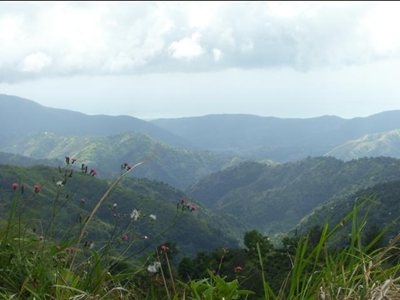
In the Blue Mountains there are a number of narrow and windy roads which you may have to take if you plan on travelling from the south to the north. Local drivers are unlikely to slow down on these twisty roads. If you are prone to motion sickness than it can be a good idea to carry the same medication that you would use to combat seasickness.
There are few traffic lights in Kingston, Montego Bay, the Spanish Town and Ocho Rios. In these cities it can get very congested so you should avoid rush hour. Driving is on the left with overtaking on the right. You should take extra care when turning and consider who has the right of way. Also be aware that it is quite normal for cars to stop suddenly and without warning or indication, particularly taxis. Drivers use their horns liberally. Drive defensively and be courteous to other drivers and you will be fine.
If you see or are involved in an accident a collision on a motorway, get to a safe place and call for it help on 119. If you are on the motorway you can use the roadside emergency phone.
The driver and all passengers must wear seatbelts by law and any children under the age of three must be in a child safety seat. Children under 12 years of age should always sit in the back seat.
As in the United Kingdom motorway signs have a blue background with white writing. Look out for signs which show T junctions and roundabouts.
Petrol is more expensive in Jamaica than in America but cheaper than many other parts of the world. At the time of writing the price per litre in Jamaica for petrol was 87 Jamaican dollars, which is equivalent to €0.67.
The blood alcohol content (BAC) limit in Jamaica is 0.035. Stay on the safe side, do not drink and drive.
You need to have your driving licence, your passport, some proof of insurance (including third party fire and liability insurance) and your vehicle registration information.
Yes and an International Driver Permit is also accepted.
Jamaicans speak a Patois dialect of English.
Petrol – Gas
Yes- Ya mon
I will be there – Me soon come
Go away - Galang
There is a long history of toll roads in Jamaica which dates all the way back to the 19th century. More recently the new highway 2000 was equipped with a toll road. There are also tolls at Spanish town, Vineyards and Portmore.
Depending on what class of car you have the toll can cost anything between 70 and 700 Jamaican dollars. The rates increased as of 2009. Visit the toll authority website for more information http://www.tollauthority.gov.jm/advisory.html.
80 kph for open roads
50 kph in built-up areas including towns and villages.
110 kph max on highways.
The conversion from kilometres to miles per hour is one kilometre = 0.62 miles per hour. Therefore the speed on open roads in Jamaica is 50 miles per hour.
To drive a rental car in Jamaica you need to be 21 years old, though some rental companies may charge you a young driver surcharge if you are under 25 years of age. Drivers need to have held their license for at least two years.
The emergency services number is 119 and you can call for an ambulance or the fire apartment directly on 110.
The British High Commission is located at 28 Trafalgar Road in Kingston 10 and can be contacted on (001) (876) 936 0700. Their website is http://ukinjamaica.fco.gov.uk/en/
The American Embassy is located at 142, Old Hope Road in Kingston 6 and can be contacted on (001) (876) 702 6000. Their website is http://kingston.usembassy.gov/
It can be tricky to find parking spaces in the main cities such as Montego Bay and Kingston. If you choose to park on the road you do so at your own risk. Car crime is not uncommon in Jamaica and there is also the chance that you will be parked in. If your car is parked make sure that any belongings are kept out of sight. It is probably best to pay a flat rate fee of 40 Jamaican dollars for one of the public car parks. It is more expensive to get the airports to charge 50 Jamaican dollars and hundred and 50 Jamaican dollars for up to one day. If you are staying in a hotel in Jamaica, most likely they will offer you free parking.